
Do You Sleep in Heaven
Today we will talk about do you sleep in heaven. Many Christians do not know what this means. This topic often leaves individuals pondering the nature of our afterlife experiences. Picture this: when we leave this earthly body, what happens next? Is there a moment of sleep, or do we step straight into the glorious presence of God? As we journey through the scriptures, let’s stay open to the wisdom shared in His Word and gain a clearer understanding of our heavenly home.
Understanding Sleep in Biblical Terms
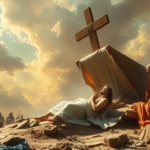
In the Bible, the concept of sleep often refers to physical death. This metaphor is used frequently to convey the idea of a temporary state before resurrection. The Hebrew word for sleep is “שֵׁנָה” (shenah), while the Greek equivalent is “κοιμήσις” (koimēsis), which also leans into the theme of rest or a quiet state. Sleep implies a pause, a momentary stillness, which Christians often correlate with the time spent between death and resurrection.
Historically, many early Christians believed in a clear dichotomy between the body and the spirit. While the body faced its end, the spirit was thought to continue in a state of awareness. This idea is echoed in the teachings of early church fathers, who explained sleep not as an end, but rather a temporary withdrawal from the physical realm. Scripture, too, sheds light on this understanding. In 1 Thessalonians 4:13-14, Paul addresses the believers: “Brothers and sisters, we do not want you to be uninformed about those who sleep in death, so that you do not grieve like the rest, who have no hope. For we believe that Jesus died and rose again, and so we believe that God will bring with Jesus those who have fallen asleep in him.”
When we grasp these meanings, we can better answer the question regarding sleep in heaven, understanding it more as a peaceful rest rather than an indefinite suspension of awareness.
What Happens after Death?
The scriptures provide substantial insight into what happens after we pass from this life. The moment of our last breath is not the end; according to Luke 23:43, Jesus says to the thief on the cross beside Him, “Truly I tell you, today you will be with me in paradise.” This statement illustrates an immediate transition, indicating that for believers, there is no prolonged slumber but an awakening to fellowship with Christ.
Following this belief, the parable of the rich man and Lazarus in Luke 16:19-31 supports the notion of immediate awareness after death. Here, both characters experience their afterlife with full consciousness, serving as a clarion call that death for a believer is not a barrier but a doorway into God’s presence. Moreover, Philippians 1:21-23 reinforces the idea of being with Christ: “For to me, to live is Christ and to die is gain. If I am to go on living in the body, this will mean fruitful labor for me. Yet what shall I choose? I do not know! I am torn between the two: I desire to depart and be with Christ, which is better by far.”
This indicates an eagerness to be in heaven, experiencing completeness with God, far removed from the concept of sleep or unconsciousness.
The Nature of Heaven
Heaven is described in the Bible as a place of perfect peace, everlasting joy, and unbroken fellowship with God. Revelation 21:4 unveils a beautiful truth, stating, “He will wipe every tear from their eyes. There will be no more death or mourning or crying or pain.” This depiction tells us that our existence in heaven is vibrant and filled with the fulfillment of God’s promises. There is no room for sleep or dormancy in this realm of light and life.
Furthermore, in the book of 2 Corinthians 5:1-2, we read, “For we know that if the earthly tent we live in is destroyed, we have a building from God, an eternal house in heaven, not built by human hands. Meanwhile, we groan, longing to be clothed instead with our heavenly dwelling.” Here, heaven is portrayed as our ultimate destination, a place of great promise where we are not just waiting but rather longing for our final transformation and union with Christ. Other verses also affirm this idea, such as John 14:2-3, where Jesus reassures His followers, “In my Father’s house are many rooms; if that were not so, would I have told you that I go to prepare a place for you?” This implies activity, preparation, and purpose — all contrary to the notion of sleep.
The Warning Against Complacency
While the notion of sleep can seem appealing, it also carries a warning against complacency for those who await the final return of Christ. Scriptures like Matthew 25:1-13 tell of ten virgins, five wise and five foolish, emphasizing the necessity of being prepared for the arrival of the bridegroom. The wise ones kept their lamps filled with oil, symbolizing spiritual vigilance. The lesson here illustrates a need for us to remain active in our faith rather than passive, contrasting the slumbering notion associated with death.
This scriptural call to readiness affirms that while death may seem like a pause, our lives are characterized by active faith and a hopeful anticipation of what is to come. We instinctively yearn for eternal life with God without being lulled into a sleepy state of passivity, as we read in 1 Corinthians 15:58: “Therefore, my dear brothers and sisters, stand firm. Let nothing move you. Always give yourselves fully to the work of the Lord, because you know that your labor in the Lord is not in vain.”
The Cycle of Life and Resurrection
The cyclical nature of life as outlined in the Bible suggests that sleep serves as a temporary pause before the grand resurrection. Christians believe in life after death and the eventual resurrection of believers, as articulated in 1 Thessalonians 4:16-17, which says, “For the Lord himself will come down from heaven, with a loud command, with the voice of the archangel and with the trumpet call of God, and the dead in Christ will rise first. After that, we who are still alive and are left will be caught up together with them in the clouds to meet the Lord in the air.” This passage reassures us that our souls do not “sleep” but remain connected to God, awaiting a glorious transformation of the body that has passed away.
The resurrection signifies a wakefulness that transcends earthly existence; it is the culmination of our hope and the miraculous work of Christ’s victory over death. John 5:28-29 proclaims, “Do not be amazed at this, for a time is coming when all who are in their graves will hear his voice and come out — those who have done what is good will rise to live, and those who have done what is evil will rise to be condemned.” Here, the image of resurrection emphasizes life superseding the notion of sleep, underscoring that ultimate reality in God’s kingdom is lively and dynamic.
Final Thoughts
Throughout Scripture, it’s clear that the concept of sleep in relation to death is more of a metaphor. When we pass from this life, we step into a new dimension with Christ. We see that heaven is not a place where we wait in slumber but an active and engaging experience in God’s presence.
It’s also a reminder of the importance of being vigilant in our faith while on earth. We are called to live fully and abundantly, knowing that our lives are a preparation for what awaits us beyond the veil of death. May we continue to encourage each other with the hope of resurrection, knowing that our ultimate destination is a vibrant, joy-filled eternity with our Savior.
As we settle on this truth, may we find peace in knowing that we will not sleep in heaven but will be joyfully awake in the presence of our Lord forevermore.
Further Reading
30 Bible Verses About Israel (With Explanation)
4 Ways to Encounter Grace and Truth: A Study on John, Chapter 4




Bible Commentary, Blog
50 Important short bible verses to comfort the sick (With Explanation)